Showing posts with label snake. Show all posts

Monday, May 12, 2014

200th Post - Hmm - Snake Conservation

This is my 200th blog post in Running With Snakes.  Have I really stuck to writing blog posts?  Holy shit - I have!  This might just be the longest running streak for something that I have EVER done.  Wow!

In celebration of this monumental post and personal achievement, I am going to take a topic near and dear to myself for discussing, dissecting, and pondering.  I have written about this topic before but it is always a worthy discussion no matter how many times we bring it up.  Regardless, it seems appropriate to dedicate my 200th post to...

SNAKE CONSERVATION

I just recently read a blog that explains in pictures why we need snakes (Buzz Hoot Roar).  Once again Indiana Jones is used as the poster boy for hating snakes (maybe I need to make a phone call to Harrison Ford about donating to the Center for Snake Conservation).  The blog explained how snakes benefit humans (pest and disease control) but it really didn't get into the amazing diversity of snakes and their behavior.  It is this diversity that I am interested in conserving - not just the rare or economically important snakes.  Snakes play roles in our ecosystems but we really do not understand their true importance.

First I am going to make some broad assumptions that I am willing to discuss with anyone.  Then I will jump into some snake conservation issues beyond what are normally discussed.

Assumptions affecting conservation efforts around the world:
  • Humans conserve what they love and understand
    • Birds - colorful, noisy, diurnal, and visible almost anywhere (big commercial industry too)
    • Mammals - cute and cuddly; big and scary
    • Fish - big money (bass tournaments), fly fishing, and food source
    • Trees - everyone likes trees especially rain forest trees
    • Insects - maybe these need more conservation efforts
    • Sharks - Shark Week - enough said
    • Whales - Greenpeace makes this a 100 million dollar business
    • Turtles - who doesn't like a turtle?  Think Lonesome George
  • Humans are stingy
    • From the poorest to the wealthiest, humans don't give up money easily
    • When humans do give money to charities, they expect to SEE (see notes above) the value
      • Snakes are rarely seen or given good press = no money
    • If a man (or woman) of God/Yahweh/Allah asks for money, the poor and wealthy give without question or hesitation - hmm (time to start my own religion)
  • Humans believe what the media (TV) tells them
    • I think we all can agree with this one
  • Humans are stupid
    • Not open for discussion
Now on to snake conservation.  I mentioned above, pest and disease control alone as great reasons to conserve snakes but no one really understands the math.  How many mice will you have in one year if you start with just a male and female mouse?  Here is the answer that staggers people:

Assumptions for exponential growth:
  • Unlimited food
  • Unlimited space
  • No death (no disease, starvation, predation)
  • Mice have an average of 8 babies in each litter
  • Mice are able to reproduce at 4 weeks old
  • Mice have a new litter every 4 weeks
These assumptions equal an exponential growth rate of 1.609438 for mice.  Do the math and the mouse population in one year will be 488,234,890 mice.  Yes - you read that right!

500 MILLION FUCKING MICE
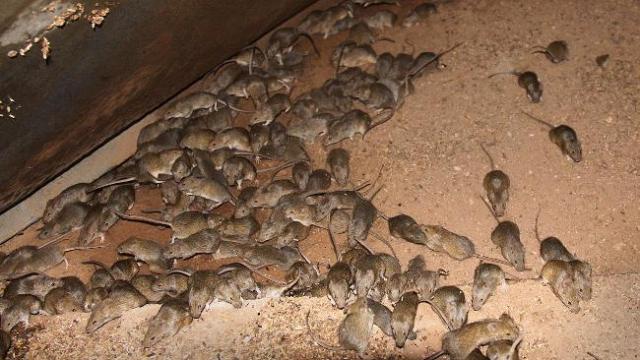
There are 113 mice in this photo.  What does 500 million look like?
I cannot think of a better reason for snake conservation.  Snakes are nature's best mouse traps.  They can enter the smallest mouse tunnels and other hiding places to find and eat mice.  They eat the male mouse.  They eat the female mouse.  They eat the baby mice.  They eat them all.  Birds (hawks and owls) can't do this.  Cats can't do this.  Only snakes can.  If you don't want to get the plague or have all your food eaten by mice - you need snakes.  Just watch the beginning of this movie clip from "Never Cry Wolf" and you will see some of the potential of mice (yes - the wolves are eating mice but they can't control the population.  Wolves only catch the mice that become exposed aboveground.  There are no snakes to eat the mice in their homes so there is still a shitload of mice present):


But...I want to bring up some little discussed snakes just as an example of how important snakes are and add to the argument that snake conservation is needed and greatly ignored - ring-necked snakes.  I am not going to insert citations but you are welcome to look up the facts and opinions I use yourself.  If you absolutely must have citations, you are always welcome to send me an email and hope it makes it through my spam filter (please no porn emails).

Ring-necked Snakes

Ring-necked snakes have a huge distribution in North America.  They range from the Atlantic Ocean all the way to the Pacific Ocean.  The variation in size, color, habitat, and diet is pretty amazing.  These are snakes that are rarely seen as well.  Ring-necked snakes are fossorial (meaning they live underground).  Some subspecies are threatened by humans and other are not. They all belong to the genus species Diadophis punctatus.  I really don't want to go into a long review of each subspecies here but if you search for photos in Google Images to get a feel for their variety.

Ring-necked Snake Distribution copied from The Reptile Database
Ring-necked snakes play a role in ecosystem health where they occur but since they are a snake and hard to reliably find, no one has really studied their connection to the ecosystem.  Until we actually get into the details of their ecology, we will have to assume that their role is huge.  Here is why:
  • Ring-necked snakes are mid-level predators meaning that they eat the small things but other things can still eat them.  This makes them a critical link in the food chain/web.  Oh yeah, I can hear you saying right now that this isn't a big deal because if ring-nicked snakes weren't there, something else would be.  Maybe but I don't think so.  For example, in the northeastern United States, woodland salamanders (Genus Plethodon) have the highest biomass of all the animal organisms in the woods.  Ring-necked snakes eat salamanders connecting the lower trophic levels of the food chain to the higher trophic levels.  Without ring-necked snakes, the energy produced by the trees, collected in plant tissue, decomposed by fungi and bacteria, and eaten by the little invertebrates would not reach the hawks, foxes, turkeys, or anything else that eats a ring-necked snake.  Rink-necked snakes are that connection from the organisms with the highest biomass (woodland salamanders) to the top of the food chain.  
Okay - big deal right.  Maybe you don't think it is but think about the salamanders for a minute.  While these salamanders do not reproduce at the rate of mice, they still reproduce.  What if the world was over run by salamanders?  While this might be a neat novelty at first, it would wreck our ecosystems by eliminating all the small invertebrates necessary for plant tissue processing - the world would look different.

Ring-necked snake eating a salamander
The biggest plus with ring-necked snakes is that they are small and beautiful.  People can and do view small snakes differently than big snakes (less fear).  Ring-necked snakes are great for dispelling myths and increasing human wonder about snakes.  I need to also tell you that ring-necked snakes also eat snakes and snake eggs - hmm...

Regal Ring-necked Snake
Guess what?  This blog post needs to change direction (sort of).  I want to list my summer action items for the Center for Snake Conservation.  The CSC has been around for over three years with not a lot of movement to becoming a PHYSICAL presence in the conservation world - sure we have an online presence but this does not mean much to people outside of the snake world.  I wrote in my blog post, "Why I Need $120,000 Dollars - An Introduction", that I only need $120K to get a facility for the CSC up and running.  Well, I also wrote that the CSC is much, much bigger than myself and my dream.  Of course, I am in it for the snakes but just think about the HUGE possibilities of snake conservation and the benefits to other organisms once the CSC is rolling physically.

Shit - I have to go back to the importance of snakes for a bit - then I will get into my plans...

Snakes are mid-level predators.  As I wrote above, this means that snakes are needed to link the low and high trophic levels in our ecosystems.  Conservation measures that benefit snakes, by default, will benefit the entire ecosystem.  If we manage our openspaces, parks, forests, and wilderness areas for snakes, we will ensure that deer have enough to eat (rodents compete with deer for mast foods like acorns), beneficial insects are plentiful, and even our plant communities are balanced.  Snake conservation is different than single species conservation (deer, turkey, or even an endangered species) because snakes are a very diverse group of organisms.

Most people don't realize the number of species of snakes that there really are.  Sure people see the gartersnakes in their yard but do they see the little brown snake (Storeria dekayi) that is a major predator on snails and slugs?  Snails and slugs wreck havoc on gardens eating just about any new plant shoot and little brown snakes keep their numbers in check.  Do they see the ratsnake living in their woodpile eating mice?  Do they see the greensnake in their bushes eating spiders?    They may every now and again but they don't hear about the huge benefit these snakes can provide humans.

Little Brown Snake
Snake conservation is not just about buying habitats and setting them aside.  Snake conservation is a huge and complex organism.  There are big issues and small issues - too many discuss here but here is one that disturbs me the most.

My biggest concern for snakes is roads and understanding the impact roads on have snakes to mitigate the number of dead snakes killed by cars.  Let's use the black racer as an example of a species that is impacted negatively by roads.  Racers are long slender, fast moving (most humans can outrun a racer - the obese and elderly may not be able to) snakes that live in most habitats.  Well, humans also like to build their houses in these same habitats so immediately we have a conflict.  Not so much with the homeonwers (racers rarely stick around long enough to be killed by a human but with cars.  Cars are the problem!  Wherever humans build a house, shopping mall, MalWart (my name for the hideous chain), or other buildings, we also build roads - lots of roads.  Snakes cannot cross roads very well.  They feel exposed which makes them slow down and cautious.  Then the car comes and - well look at the photos below.


Who cares?  So we don't have racers in our neighborhoods - big deal.  Actually it is a big deal - racers will eat anything that moves and they can fit into their mouths.  This included venomous snakes such as copperheads and rattlesnakes.  Yep - kingsnakes aren't the only snake eaters out there.  Racers also eat insects, mice, birds, frogs, salamanders, etc.  You got it - they are important!

Racer eating a copperhead
BUT....ROADS SLAUGHTER SNAKES!  What can we do about this?  Well, we can study our roads and find out if there are patterns to snake road mortality.  If we learn that a specific section of road is killing 75% of the snakes we find dead on the road, we need to construct an underpass.  If we learn that snake deaths are evenly distributed along the section of road, we may need to construct several underpasses and road barriers to direct snakes to the underpasses.  These studies are not being conducted.

In areas where new roads are needed, careful planning should occur to keep habitat corridors intact by building bridges or better yet - avoidance.  Also - we should NEVER use nylon mesh for erosion control.  This stuff is deadlier than roads but is commonly used to stabilize soils after road construction.  Well - nylon mesh is another blog post for a different day but I will at least share the success story below.


I can rant and rave about roads and the need to mitigate the number of snakes killed every day crossing a road but it is just frustrating me right now.  My writing is going to shit because of it.  I need to move on.

What am I going to do for snake conservation this summer?  Here is a list of 10 things I will be doing:

  1. Solicit donations from everyone (yep - here I come)
  2. Find 2 new board members who can make the CSC move
  3. Continue giving snake talks
  4. Get involved with the CSC Facebook page again
  5. Make more videos to show people how amazing snakes are
  6. Solicit donations (yep - again)
  7. Advertise the CSC across multiple media types
  8. Make CSC membership mean something
  9. Establish a CSC weekly email update to members
  10. Establish a CSC monthly newsletter for broad publication

We have been complacent too long - it is time to get it right.  I expect you as my reader to support my efforts and consider making an effort of your own.  Snakes are too important to be ignored any longer.

Snake Conservation Is A Priority Because Snakes Make The World A Better Place.


Well - folks.  There you have it - my 200th post - #201 coming soon.


Friday, December 20, 2013

Sadness

Do you ever just feel sad?  I do and that is the way I feel right now at 9:44am on Friday, December 20, 2013.  Why?  Lots of reasons actually.
  1. Future - I am not thinking about the future and what it holds for me.  I am still living in the past and a little bit in the present.  Just look at my blogs.  I promised in my first blog to be candid (I have been), honest (I write in code but it is honest), and to not write about the past.  I have been dwelling on who I was and not who I am going to be.  It is time to start looking forward and to achieving my goals and finding the happiness I deserve.
  2. Relationships - Read Southern Fried Chicken.  Am I doing this?  Not really.  I said I would but I keep finding ways to sabotage myself.  I keep saying the wrong thing.  I keep doing the wrong thing.  I owe it to my current, new, and future relationships to hold myself accountable in meeting the needs of those that matter to me.  I historically have not met your needs and I am trying to learn.  I do need patience from you as I learn to give and receive love.
  3. Fitness - I have been ignoring my fitness.  Today's blog is about getting active.  The blog MyFitnessPal is about branching out to an online community for help.  I don't think I have logged into MyFitnessPal since the day I wrote the blog - WTF!  I am trying to keep up with FitBit by sending taunts and cheers but I am 18th on my leaderboard with only 60,000 steps in the last week.  I used to average 100,000 steps a week.  I have one FitBit friend that I chat with quite often to check in about our step totals, our lives, our needs, our wants, and help motivate each other.  It is this understanding that I need to embrace and use it to move forward.  I am hoping today's Pig to Fox blog does just that.
  4. Running - WTF! Have I forgotten my passion?  What is the name of this blog?  This is completely unacceptable and instead of beating myself up, I am going to blog every run I do from now on.  They may be boring blogs to you but they will hold me accountable.
  5. Snakes - WTF!  Have I forgotten my passion?  What is the name of this blog?  I am going to bring you a snake every day from today on.  These blogs may be boring to you but they will help keep the fire in my passion burning.  I have almost put the flames out.
  6. Future - Yes.  Again.  This is very important.  I have been living in the self-defeating world of my past (read Where Have I Gone).  In my first blog, I gave you permission to "kick my ass" if I started talking about the past.  I want you to "kick my ass" every time I do this.  I want you to "kick my ass" even if I say something that shows I am living too much in the present (dangerously close to the past) and not looking forward to the future in my blogs, texts, or conversations with you.  Until I learn this myself, the "kick my ass" reminders will be needed.  Yes, I am often very "good with words" but this does not make me right.  My skill with words has come from years of talking myself out of improving, out of changing my situation, of staying comfortable with my depression, and ignoring those that matter to me (basically keeping me in the comfort of the past no matter how unhappy I may be - the future is scary!).  I apologize if I have ever used my skill with words against you.  It is not my intent to hurt you.  My words are used to keep myself comfortable.  This can be hurtful to you and it is especially hurtful to myself.  I am sorry. 
So there are lots of reasons I feel sad today.  Most of them have to do with me not keeping my promises to myself (using my skills with words to talk myself out of living for the future) and others.  Others have to do with my failures to others and my relationships.  This sucks.  I am sad today but I have another 16 hours today to make sure I end it happy.
 
So it is time to go for a walk, think about all this, and be happy.
 
Cameron


Monday, December 16, 2013

Eve

Ever wonder how a herpetologist views the story of Adam and Eve?  This graphic from JKR Gear says it all.  :)  If you don't get it - well I guess you just won't get it.


300

Do you remember the movie 300?  You know - the movie where the Spartans battles Xerxes' armies with very little armor (none but a helmet actually) and abdominal muscles painted on their stomach.  These Spartans took on impossible odds to defend their families, homes, and land from a Persian invasion.  They are an incredible example of how determination, grit, and confidence can help you succeed against all odds in any challenge.  While you may argue that the Spartans did not succeed because they all were killed, I disagree.  They inspired a nation to ultimately defeated and drive the Persians from Greece.  We are also still talking about their last stand at Thernopylea which shows success beyond the historic events of the 5th century.

I recently tackled a challenge that involved the number 300.  It was nothing as monumental as the challenge the 300 Spartans faced but it was still a challenge.  I tackled a challenge to climb 300 floors in one day.
 

Yes - I competed in my own 300 challenge last Wednesday (December 11, 2013 - just in case someone is reading this in May).  My challenge was to get my next Floor Badge on FitBit.  A Badge is a small reward for completing some task (steps or floors) that is recorded with my FitBit.  The Floor Badge is given when you complete a certain number of floors in a 24 hour period.  A floor is defined using a tiny barometric sensor inside the FitBit that measures elevation gain.  Any elevation gain of 10' is equal to one floor.  This can be on a hill or stairs; however, floors will not be registered on a treadmill or stair machine because you do not actually gain elevation.

I earned my previous Floor Badge sometime this past July when I climbed 200 floors (or 2000') in one day.  If you are mountain climbing this really isn't that much but try doing that on a work day - not easy.  I had to add 100 floors for my next badge and this task was not going to be easy.  But since it was a challenge, I was committed to the 300 floors once I started.

I got up last Wednesday and fuck, it was a crossing guard day.  I had forgotten this when I accepted the challenge.  This meant I was going to get a very late start on my floor challenge as it wasn't likely I was going to get any floors while helping the kids and parents across the street.  I was bumming.  No problem - despite the 3 hour late start, I knew could still complete the challenge.

Crossing Guard on my Floor Challenge Day
My first challenge of the day was to remember to use the stairs on my way into work.  It is easy to see the elevators and just hop in for a ride up.  I work on the 6th floor of my building and it is 99 stairs to climb the 5 flights.  Each stair is approximately 7.5" tall so I would climb approximately 61' or 6 floors just to get to my office.  Lucky for me, my building has 8 floors plus another flight of stairs to get onto the roof.  The total number of stairs from bottom to top is 154 which equates to just over 9 floors (sometimes the FitBit would register 10 floors from bottom to top).  I now had developed a plan for success - office stairs.

The stairs at work
I set a goal at work to climb 200 floors which would leave 100 floors for me to find/climb once I got home.  I figured I could easily rack up stairs in short 5-10 minute efforts of 18-36 floors at a time.  I blew past my goal and managed 250 floors while at work by climbing 2 to 4 bottom to top stair repeats every 30 to 60 minutes.   My plan was perfect and brought me closer to success than anticipated.

After work, I headed out to catch the bus at the RTD station which just happens to be underground.  The universe aligned perfectly for me with the bus being late.  Normally this is a pain in the ass because it means I pick the boys up late which in turn sets the stage for a late and hurried dinner.  I did not care about being late today though - the late bus meant I climbed another 15 floors while waiting.  The photos below were taken at the bottom of the stairs as I begun each repeat.  I was rolling.

RTD Station #1
RTD Station #2


RTD Station #3
RTD Station #4


RTD Station #5
RTD Station #6

I got another bursts of steps when I got off the bus at another set of stairs bringing my total floors up to 270.  Another 30 floors was going to be a piece of cake once I got home.  I came in the door and immediately started climbing from the basement to the second floor clocking 2 floors each time.  In between getting the boys set with their homework and late afternoon snacks, I completed my 300 floor challenge.  That was a total of over 3000' climbing in one day without going to climb a mountain.  My legs felt good except my calves which I knew would be sore as shit the next day (turns out that they are still sore 5 days later - ouch!).


Next up is 400 floors but I think I will wait a while before I attempt that challenge.  The real question is why did I attempt a challenge like this is the first place?

10 Reasons to complete a 300 stair challenge:

  1. Bragging rights
  2. Increase fitness
  3. Build self-confidence
  4. Follow through on a commitment to myself
  5. Active breaks from sitting and staring at a computer all day
  6. Combat ADD with sticking to a boring task (although the ADD may help with # 5)
  7. Impress a Victoria's Secret Angel (if I ever get to meet one and she even acknowledges me)
  8. Build better calves
  9. Hope the Victoria's Secret Angel notices #8 and calls
  10. Get strange looks from family, coworkers, and strangers

    Victoria's Secret Angel
    Calf

    In all seriousness, numbers 3 and 4 above are great and real reasons to complete a challenge.  Especially for me - my low self-esteem really needs a boost every now and again.  It felt incredible to watch my FitBit roll over that 300th floor.  I had done it.  I was flying high.  I was high fiving my boys and my FitBit friends sent me congratulations.

    Any challenge in your life can and should be beneficial even if you fail - the trick is to find the positives (something I suck at).  The Spartans failed but their story remains an inspiration for all to keep fighting against all odds.  They believed in themselves!  Even in death, they demonstrated what determination can achieve - success when faced with the impossible.  They not only decimated Xerxes' armies before they died, they inspired a nation to fight.  Believing in myself and refusing to quit fighting despite the challenge is something I do not know how to do - I have ignored or quit challenges way too easily and for way too long.


    I have many challenges in my life right now and most of them have been relegated to the "I am never going to succeed so why try" category.  This has been and still is devastating to my self-esteem and confidence.  My goal in the next year is to turn my attitude around and face my challenges head on regardless of the outcome.  If I don't try, how can I ever be successful?  I am also learning that success does not always come right away but through persistence, remaining positive, and focusing on my goal, I will find success even in failure.


    What all of this really means is that I am going to become a Spartan and conquer my fear despite the odds.  The Spartans were defending their lands and people from Xerxes - I will be fighting for my relationships (new and old), my goals (Center for Snake Conservation), my fitness (finding a Spartan body even if I have to paint abdominal muscles), and my life (beating my anxiety and depression).

    This blog has already been a huge accomplishment for me.  It has allowed me to scream to the world what has been bottled up in my brain for so long.  This is a new experience for me as I normally would hide my feelings deep within the walls and catacombs of my brain.  I also never dreamed that I could stick with this blog or that it would become a focal point in my personal challenge for happiness.  I know I have just touched on the easy things so far but it is exciting to think of the challenges coming up as I tackle the hard things.

    This excitement reminds me of a previous blog post where I used the analogy of chasing my passion and dedication to learn about the Rainbow Snake.  As I have written before, rainbow snakes drive me insane, make me happy, challenge my intellect, have an amazing beauty, and should be celebrated when found.  This is the challenge of life for me - fighting for what I believe in and finding positive outcomes in all challenges (accomplished or failed) I have accepted or will accept in the future.  I won't ever know what life is all about if I never try.

    Rainbow Snake
    There are many challenges ahead of me.  With the rainbow snake, I don't care if takes me another 1,000 nights of walking streams to discover their secrets, I will do it.  With my other challenges shelved away as impossible, I will dust them off and tackle them full on.  If I can do this, I only see happiness in my future.  Hell - if I am lucky enough, maybe that VS Angel will give me a call.


    Friday, November 22, 2013

    Snakes - Why Did It Have To Be Snakes?

    Snakes - Why Did It Have To Be Snakes?  Indiana Jones made this line famous in the 1981 movie, Raiders of the Lost Ark.  As the Executive Director of the Center for Snake Conservation, I get this question a lot.  In particular people want know when I became interested in snakes?  It fascinates people to learn that I don't remember when my passion for snakes began but I do know that unlike Indiana Jones, I have never had any fear or anxiety when it comes to snakes.


    Snakes to me are incredible creatures.  They go through life without arms, hands, legs, or feet yet are very successful across the globe.  They have many adaptations that have help them survive in many different conditions but a discussion about each one of those are separate blogs.  But as a quick example, check out the Spider-tailed Horned Viper's tail that is used to attract prey in the short video below. 


    Snakes occur on all continents except for Antarctica.  There is even a species that occurs north of the Arctic Circle in Europe.  If you truly cannot stand snakes there are three places you can go and live snake free - the Antarctic (freezing butt-ass cold), Ireland (I can't understand their English), and New Zealand (the only problem with this island nation is that they don't have snakes).

    Let's now talk about some of my early snake experiences and my current position so that we can prepare discussion about what the future is going to bring me.  I am not going to excite you some stories about real snake adventures - you will have to wait for future blogs for that.  This blog is about the impactful events that help fuel my passion and build my relationship with snakes.


    I have two early snake memories and unfortunately I don't have any photos to share.  The first was walking in the woods next to a stream in Tennessee with my brother.  All of a sudden he yanks me off the ground and throws me on the other side of him.  I had nearly stepped on a kingsnake.  As the adrenaline spike subsided, he then found a stick, pinned the snake behind the head, and we took it home.  We no longer pin snakes as there is absolutely no need to ever do this to a snake - it is just cruel.  I had that kingsnake for many years and it even stopped my room from being ransacked by a burglar.  Our entire house had been turned upside down except for my room.  I had the snake on my dresser and the top drawer had been opened and emptied - that is when I think he/she saw the snake and got the hell out of my room.  Since I don't have any photos I will spare you the other story but will tell you it involved a gigantic watersnake and some freaked out friends.

    Eastern Kingsnake as found in Georgia
    My first solo snake capture came when I was 9 years old.  I was able to catch a large Black Ratsnake along the edge of an old field at Earlham College.  I spotted the snake out of the corner of my eye and my heart rate instantly sky-rocketed with the surge of adrenaline released from my adrenal glands.  I did not want the snake to escape (this was before I knew that most ratsnakes freeze to avoid detection and will not flee unless prodded) so I looked around for a stick to pin it with (again with the pinning).  All I could find was a short foot long skinny nothing of a stick.  Better than nothing I thought as I reached down to pin the snake.  The stick broke instantly and I was stuck with a dilemma - go find another stick and risk the snake getting away or picking up the snake freehand.  I chose freehand and with a lot of self talk, grabbed the snake behind its head.  My first SOLO snake capture!!!!

    My first solo snake capture
    The snake was longer than I was!
    Here is my brother's account of the story as he includes my first teaching opportunity to a group of birders.

    "When I was a freshman in College I was asked by my Ornithology professor to help lead a bird-watching field trip on “back-campus” around the time of graduation.   My family was in town because my older sister was graduating that year, and they happened to be staying at the Yokefellow Institute, which was situated in the middle of back-campus.  When the group of bird-watchers got out there, I noticed my brother – about 9 at the time – out exploring around the institute.  As the group of birdwatchers headed off on a trail through an old apple orchard, moving quietly to watch and listen for birds, I hear this loud whisper from behind us trying to get my attention.  “David, David – I caught a snake!”  On turning around to look, there was skinny 5-foot Cameron standing in the weeds holding about a 6-foot black-rat snake!  My ornithology professor – the late Jim Cope - also noticed the loud whisper and saw my brother and invited him into the group with his prized catch!  Jim was so impressed and excited with this young boy with the big snake that it became the highlight of the bird-watching tour."
    Black ratsnake defensive posture
    Not my photo
    Although I already had a very strong interest in snakes, my solo capture of that ratsnake in Indiana ignited a passion that is still raging out of control 30 years later.  I went through a lot of phases in my snake passion to get where I am today.  While in high school, I wanted to breed snakes and come up with a new color or pattern morph of a cornsnake.  Cornsnakes are probably the most common snake in the pet trade (a close race with the ball python) and now there are over 100 different color and pattern morphs.  If I had stuck with breeding cornsnakes, I have been able to come up with one of these hundreds but my passion changed to field snake ecology shortly after going to college.  I did however take all my cornsnakes and my entire breeding mouse colony to college with me.

    As a freshman in college, my academic advisor, Dr. John Iverson, invited me to join him for an entire semester in the Sandhills of Nebraska.  This meant taking an entire semester off from school without credits and taking more credits each semester in the future to catch up so I could graduate on time.  I of course agreed and was off to Nebraska with him.  In Nebraska I learn more about field ecology than I ever knew I could.  John quickly became my mentor and then an incredible friend that I still take for granted all too often.  Heather and I lived together off campus for our senior year of college and it still makes Heather laugh that a professor would call me on a Friday night to see if I wanted to go out and chase herps across the state.  We were and still are friends.

    Photographing a pair of mating bullsnakes
    In Nebraska I found bullsnakes - lots and lots of bullsnakes.  We were working on a National Wildlife Refuge and as part of our "rent" we ran a 7 mile drift fence around a lake system that was designed to catch bullsnakes to protect duck eggs from predation.  This fence caught more bullsnakes than I ever imagined possible.  I was in heaven.  I even kept a few bullsnakes in our bunkhouse and in true snake fashion they would escape their cages.  One night I woke up with one of my escaped bullsnakes crawling on my back - what a thrill!  I loved every minute of my time in Nebraska and it was worth the extra work to catch up with the rest of my class to graduate on time.

    Really the hair!
    It looks like I am afraid of that tiny bullsnake
    I continued to work with snakes around the college campus but the real adventures started when I was awarded a contract in 1994 to study Copper-bellied Watersnakes on the Muscatatuck National Wildlife Refuge near Seymour, Indiana as a sophomore in college.  Who would have thought that I would get a real contract to study snakes!?!  My job was to conduct a reptile and amphibian survey of the refuge and also find out what I could about the status and distribution of the copperbellies.  I spent hours and hours combing what I considered my own private refuge and got to know a species of snake that others rarely ever saw much less catch.  Copper-bellied Watersnakes are very beautiful snake which are an endangered species in parts of its range.  My study helped keep it from being listed in the southern part of its range because I ended up catching so many demonstrating the security of its status on a refuge.  I am proud to be a part of this effort but this is not the real story for today's blog.

    Copper-bellied Watersnake
    Anyone who has caught or handled watersnakes know two things about them - they bite readily and repeated when grabbed and excrete a strong smelling musk.  Every snake species can excrete musk and they all smell different.  I pride myself on my ability to determine a species of snake by just its smell.  After my first summer of catching copperbellies, I began to crave their bites and musk (strange addiction).  Even to this day the smell of a copperbelly does not disgust me but it turns me on - it reminds me of the pure pleasure I had while catching Copper-bellied Watersnakes for the next 3 years in college.

    Catching baby watersnakes out of a bush
    While in college I also got the opportunity to go to Kenya for an entire semester.  This program was sponsored by the college and we received credit while there so there was no making up school work for this amazing adventure.  While in Kenya, I did some REALLY STUPID things with snakes.  I mostly found and caught harmless greensnakes which were fun to torment and educate the children with.  The stupid snakes were the bush vipers I caught as well as holding some species I had no business even touching.

    Bush vipers are small arboreal snakes found in the lower canopy of understory trees.  During our homestay in Kaimosi, I learned I could find them in the small forest preserve at the top of the largest hill.  One afternoon, Heather (I officially met Heather in Kenya) and I were using the shortcut trail through the forest when I spotted a bush viper about eye level that was catchable.  Heather tried to talk me out of catching it but I wanted to show this incredible little viper to the rest of the group.  I dumped out the water in my Nalgene water bottle, found a stick, and tried to corral the snake into the bottle.  No go - the snake just kept coming out of the bottle and climbing higher into the tree.  I was desperate not to let it get away so I hooked the snake with my stick and flung in to the trail so I could work with it in a (what I thought) safer place.  Well I flung the small venomous snake right at Heather's feet.  She expressed her displeasure with a few choice words despite my assurances that the snake could not bite her.  I then pinned (again!) the snake and put into my water bottle.  Mistake #1 in Africa - handling a venomous snake several hours from adequate medical care.

    Green Bush Viper
    Not my photo
    Mistakes #2 and #3 were beyond stupid.  While on vacation with Heather in Diani Beach on the coast of Kenya south of Mombasa, we found a small reptile park tourist attraction.  As a budding herpetologist, I just had to go inside and see what they had.  This reptile park consisted of about 20 homemade cages on stilts filled with a bunch of cool critters in cages including a puff adder (mistake #2) and green mamba (mistake #3).  Well I just could not pass on the opportunity to actually hold these notorious snakes so I asked the caretaker/guide/owner if he minded if I got them out of their cages and held them.  He was very reluctant but then agreed.  I held both of these amazing snakes and even squeezed venom out to see the fangs in action.  The puff adder has long curved fangs that fold into its mouth when not in use and the green mamba has short fixed fangs in the front of its mouth.  Both sets are deadly in their own way as they transfer highly toxic venom deep into their prey.  These mistakes (#2 and #3) could have killed me.  We were a minimum of 8-10 hours from medical care that could have treated a bite from either one of these snakes.  Just Plain Stupid.  When I ask Heather why she allowed me to hold these snakes (she took the pictures below) in Kenya, she responds, "I didn't love you then".  Nice response Honey.

    Stupid, stupid, stupid
    While I have pinned and held venomous snakes since then, I have also begun to understand (more accept) the risks of handling venomous snakes.  There is a reason most venomous snake bites occur to men between the ages of 18-30.  Hmm.  Makes sense doesn't it (testosterone driven brains)?  I now have an absolutely no pin and grab policy with venomous snakes as there are many other ways to capture and process them without risking injury to the snake and a bite to me.  I also don't ever pin non-venomous snakes anymore.  It is just cruel and you run the risk of really hurting the snake.

    One way to safely handle venomous snakes
    I am almost to the present and future of my passion and relationship with snakes but you have to bear through a few more short stories.

    Grad school - this is where my snake passion helped me and also destroyed me at the same time.  I attempted grad school at two different universities in about a 6-7 year time period.  Both times ended in failure.  Not failure as in failing classes but failure to follow through on research and complete a thesis.  Why?  Because I was chasing snakes.  The first grad school attempt was in Florida.  I should have seen this failure coming from a mile away.  There were tons of snakes that I had read about my whole life but had never seen in the wild.  It was my goal in Florida to learn the habits of each species and be able to target its capture anytime I wanted to.  Well this meant there was no time for research and there really isn't a thesis to be written on how good I was at catching snakes.

    Eastern Diamond-backed Rattlesnake
    Example of how hard snakes can be to spot but I got good at it.
    My second grad school attempt was almost successful (well not quite but let's pretend it was).  I was personally invited to pursue a PhD with one of the world's premier herpetologists, Dr. J. Whitfield Gibbons after acing his herpetology class with a passion that may have surpassed his passion for snakes (Whit is technically a turtle biologist).  I was flattered - beyond flattered that I turned down a master's program that I was already accepted into in the wildlife school  Working with Whit was a dream of mine ever since I had read his book "Their Blood Runs Cold" 12 years earlier.  My dream come true.  Well two years into the program I was still taking classes and had no research completed.  I loved taking classes because it helped me avoid the research.  I probably have more coursework under my belt than any graduate student in history.  I then moved to the Savannah River Ecology Laboratory to try and conduct research after agreeing with Whit that a PhD probably was not best suited for me and I should pursue a master's degree.

    I failed again because all I did at SREL was catch snakes, catch more snakes, and catch even more snakes for other people's research.  Sure I tried to do my own research but I was much better at catching snakes.  I was so good that Whit complimented me many times as the "best snake catcher he has ever known".  I even have proof in my personal copy of Whit's book "The Snakes of the Southeast" which he signed for me with that compliment.  Too bad being good at catching snakes doesn't get you a degree - I might have two or three PhDs by now.

    However, one good thing about grad school is that you get the opportunity to teach.  I was lucky enough to help teach the Herpetology course at UGA.  This was exceedingly fun and my ability to catch snakes was well received and welcome on our many field trips.  The outcome of all this teaching was that another passion was ignited inside of me - teaching.  This is a whole other blog topic.

    Teaching
    Well after a long hiatus from the academic world, I have finally found something that being good at catching snakes is a huge benefit - the Center for Snake Conservation! 


    It took me over 10 years working as an environmental consultant for the oil and gas industry to make me unhappy enough and push me towards a career that will mean something and make a difference for snakes.  While I still am working as a consultant, I am also working towards my goal of leading the world's most impactful organization for snake conservation.  The CSC has three types of programs - Education, Science, and Conservation.  My skill at being a very good snake catcher benefits my participation in all these programs.  During education programs at any venue for kids and adults, my field experience translates directly into stories about personal encounters with the snakes I am using to change human perceptions.  This is a unique approach that is very different than just telling the facts.  I have lived and breathed snakes since before I can remember and this passion can inspire someone who is fearful of snakes to have a new understanding about their role in our healthy ecosystems.

    Being good at catching snakes is easily translated into our science programs.  The CSC conducts snake inventories across the country (a little exaggeration but we are growing to fill this need) and if you aren't good at finding snakes you are wasting your time conducting inventories.  Easy fit.  The CSC's conservation programs benefit from my being good at catching snakes because I can evaluate habitat quickly based on my experience with snakes in the field as to where and what we should focus conservation efforts on.

    So in the end - being good at catching snakes does have its benefits even if it does mean I failed out of two graduate programs.

    Marking a rattlesnake safely contained in a tube
    There, I laid it out there.  This blog explains part of my history of "why did it have to be snakes?".  I have many, many more snake stories to tell you but I wanted to start in the beginning with the facts about the who, what, when, and where of my development as a snake person. 

    Snakes are my passion.

    Snakes are a HUGE part of who I am.

    I have been blessed by amazing people encouraging my passion and incredible experiences which have made me good at what I do.  I plan on continuing pursuing my passion for snakes even when I am on my death bed.  I have gone so far as to joke with my boys that after I die, they had better feed me to an anaconda.  If you don't like it - tough!